
Welcome to our executive Q&A series, where Stockhead reporter Josh Chiat sits down with leading figures in the ASX mining industry.
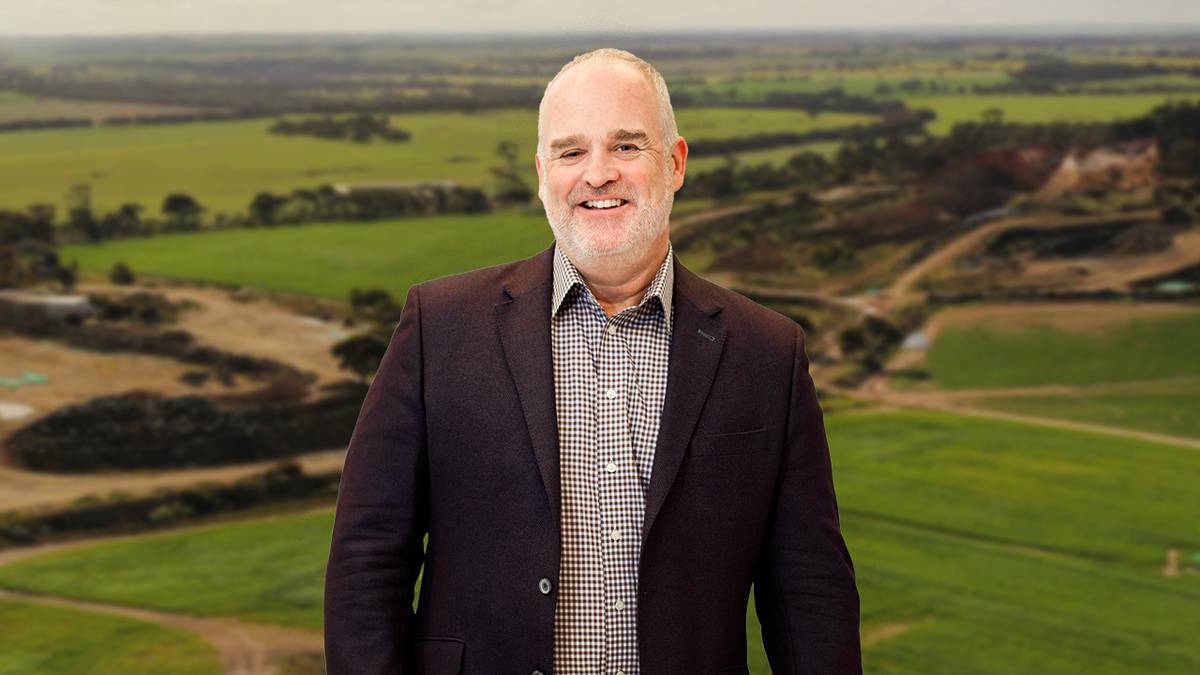
This week, he talks to Ausgold executive chairman John Dorward.
John Dorward has been there and done that plenty of times before, so his latest exit at Ausgold (ASX:AUC) should be no surprise to those who’ve followed the mining and finance executive’s career.
It started with MPI Mines, where Dorward was commercial manager of the runaway nickel and gold IPO success ahead of its acquisition by LionOre, which was itself later acquired by Norilsk.
He then emerged as CFO at Leviathan Resources, which held MPI’s Stawell gold mine and eventually merged with Fosterville gold mine owner Perseverance Corporation. Fosterville, which would go on to briefly become Australia’s largest gold mine, now sits in the global portfolio of gold giant Agnico Eagle.
Then came Mineral Deposits Limited, where Dorward was again CFO, ahead of the spinout of its Sabodala gold mine in Senegal into Teranga Gold – later prey for West African gold specialist Endeavour Mining.
And then his two highest-profile successes: the sale of Canada’s Fronteer Gold to gold major Newmont for C$2.3bn as its VP of business development and then Burkina Faso gold miner Roxgold to Fortuna Silver in a C$1.1bn transaction.
Now, just two years after entering the hot seat as exec chair at Ausgold, Dorward has another deal on the table.
TSX-listed OceanaGold has agreed to acquire the developer of WA’s potentially 120,000ozpa Katanning gold project in a deal that valued Ausgold at $776 million when announced last week, with up to $194m payable in cash.
The deal clocked in at a 44% premium to its 20-day volume weighted average price, though rising gold prices have since taken Ausgold’s shares past the $1.36 offer price.
We spoke with Dorward about his approach to building gold developers, addressing criticism in dealmaking and why it’s important to look past preconceptions when taking on a project.
So you’re up about 350% in two years and now we have the news of the company’s planned sale to OceanaGold. When you arrived as executive chairman and Dundee came in as a major shareholder, was that always the kind of outcome you envisaged?
I’m generally agnostic at the start. I think whether you’re going to build it or you’re going to sell it depends very much on valuation at the time and they’re not mutually exclusive.
So the work that we needed to do to be able to do a feasibility study, finance the project, permit the project, is exactly the same work that a prospective acquirer would need to see done. We didn’t have to choose a particular fork in the road.
I did, however, always feel that this would be a good portfolio project for a larger company.
The last two years has delivered really strong return on equity, we’re getting to the point where the real risk starts to take hold, which means you’ve actually got to finance it, and you’ve got to build it and commission it, and then operate it.
Sure, we can build it, it’ll probably go up in value, but how many shares do we have to issue to get there?
A lot of the value surfaced in those two years by really just being able to make a credible development story, and then we were able to attract a company the calibre of Oceana.
It just made sense to do the transaction now and bring those returns forward for shareholders and de-risk it going forward.
What do you think it means to have a company like Oceana, which doesn’t currently have any assets in Australia, looking at developers in WA when there were no apparent geographical synergies?
They look at things to a similar extent the way I do. Good projects are where you find them.
I live in Melbourne, (and) I’ve done a lot of work in Western Australia but I’ve been offshore for a long time and building projects predominantly in West Africa but also developing assets in North America – Canada and the US.
And I’ve been a little bit surprised by what I would say is the preoccupation with bolt-on expansions and consolidation. It doesn’t seem like greenfields projects in Western Australia get a lot of airtime.
It’s always about who’s got a processing facility nearby and (where) can we get some synergies? That’s great if it’s achievable, but those situations are very much the exception rather than the rule.
Some of the commentary we’ve encountered is Katanning is an isolated asset.
My answer to that would be, well, that’s why we’ve been able to establish a large regional land position.
We built the first gold mine in Senegal in Sabodala back around 2009. And that was the first gold mine in the country, let alone the first gold mine around the Katanning region, a few hours away from dozens of other gold mines.
So it’s always struck me as a pretty strange way to look at things.
Sure, if you’ve got established infrastructure and you can do a bolt-on acquisition nearby, that’s going to win nine out of 10 times. But it doesn’t mean you can’t look at things that are standalone opportunities where you can be the first-mover in a province.
That’s the opportunity at Katanning.
Everybody mentions the Roxgold deal, which proved well timed given what later happened in Burkina Faso, and the Fronteer Gold transaction. Going further back there’s Sabodala and the MPI story. I think you’ve been involved in four or five of these deals now. Has that become a modus operandi for you, or is it just good fortune?
It’s really been a focus, I think, on good projects. We listed MPI Mines, IPO’d it, and it was the IPO of the year – I want to say 2004 (Ed: 2003, we checked the records) – and then it was acquired by LionOre 18 months later … for about a 7x return on the IPO price, and then LionOre got acquired by Norilsk pretty soon thereafter.
The return from that original IPO was outstanding at that point and then we spun Leviathan Resources out, which we ended up merging with Perseverance who owned Fosterville at the time, before we knew what a beast it was going to turn into.
I’ve been in the fortunate position of having had projects or mines that have been attractive to other parties and that are sitting in listed companies. If a third party comes in and wants to pay a decent premium I think you need to take that on board.
I’ve said no to deals in the past that didn’t make sense for one reason or another, even at a premium, but with Fronteer Gold, for example, it was just an out-of-the-box success when we sold that to Newmont.
We copped quite a lot of flack for selling that, mainly from retail shareholders, and I just scratched my head at the time because this was an all-time slam dunk deal to sell that to Newmont for US$2.3 billion. [Ed: C$2.3 billion.]
Nobody really knows these projects as well as the management team does. I think that’s probably an obvious statement, but a true one.
So you know being taken over doesn’t worry me. I think the worst thing you can do as a management team is become entrenched and fearful that you’ve got the best job that you’re ever going to have and you want to cling onto it for dear life. That doesn’t do anyone a service, it’s a great disservice to shareholders to be entrenched like that.
We’ve always been open-minded to how do we create value for shareholders and I’m not saying we get it right all the time, there might be more value than you had, but there’s always a risk attached to that. And it’s just generally a judgement call at the time.
If you fight tooth and nail to protect your job, I think that’s the worst thing a management team can do.
That brings us to some of the commentary over the past week from the retail shareholder base about the sale price and maybe not representing true value for Ausgold. How do you respond to commentary like that so soon after the announcement?
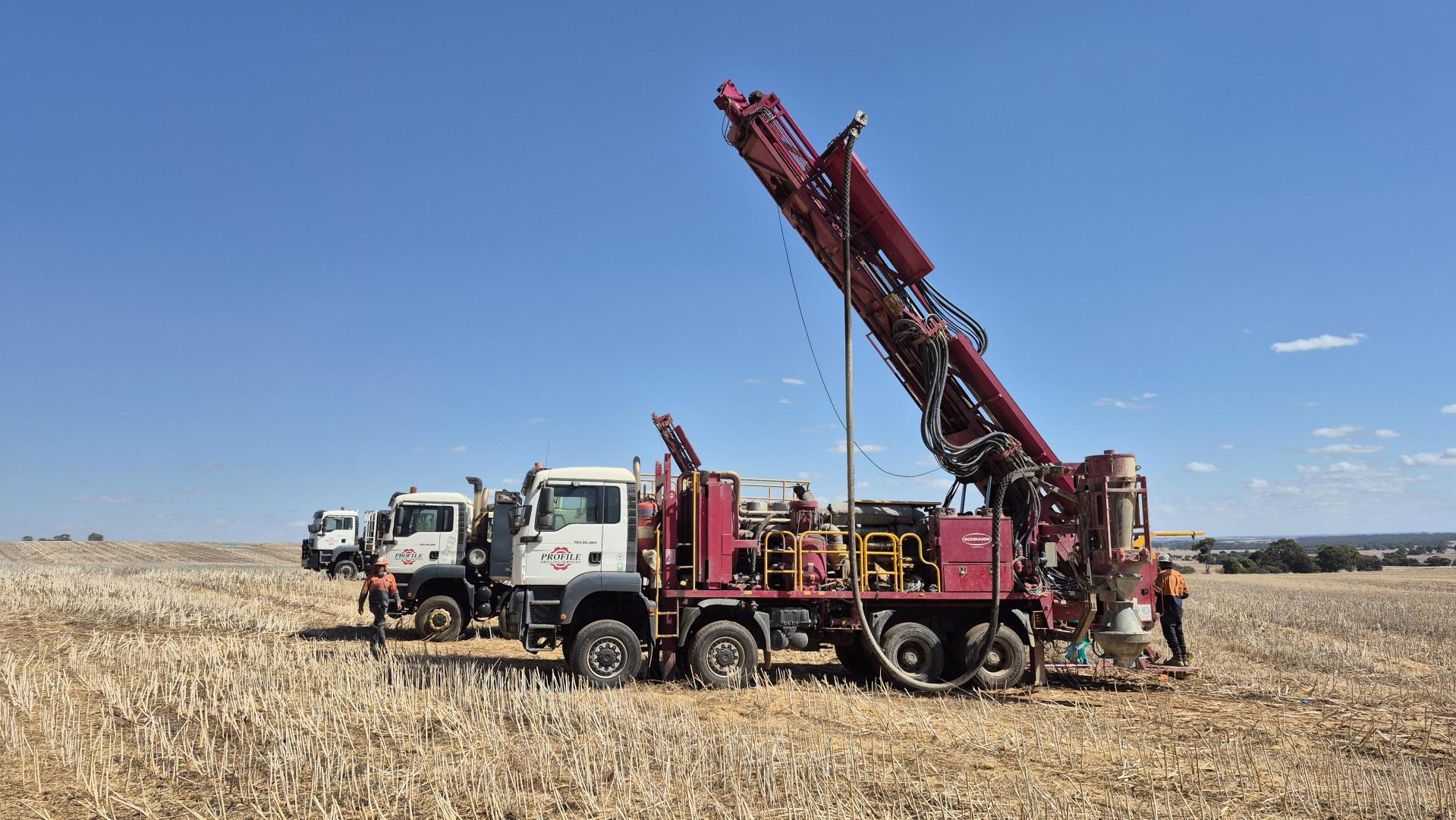
Everyone is entitled to their own opinion and they can form their own view. I mean, from our perspective, we felt that it represented good value for the project at the time, again on a sort of a risk adjusted basis. For Katanning it’s a really solid project, but its geology’s a little more complicated than a lot of other projects in Western Australia. We’ve addressed that by drilling it substantially.
We’ve de-risked that and that’s what Oceana saw. I think a lot of people when they look to Katanning – and I’m thinking of other gold companies – really had made their mind up about the project some years ago and weren’t really willing to change.
So we went out far and wide to see what the interest was as you achieve these various milestones like the completion of a definitive feasibility study, you go and test the market and you go out to a large number of groups. I was surprised some of the obvious candidates didn’t want to sign an NDA and didn’t want to have a look in the dataroom.
They’d already made their mind up even though we’d done a lot of work around the metallurgy, around the geology with the drilling, and had substantially de-risked it with significant land purchases.
So we ended up doing a lot of work with Oceana, who I think had the benefit of coming in without a lot of preconceived ideas. I can’t speak for them, but I assume they looked at it on its merits and they saw what we saw – which was a really attractive project that could get built in the current cycle and fit into their portfolio.
Some of our shareholders have a different view. By and large, the feedback from our institutional shareholders … has been uniformly very positive. They think this is a fantastic deal. They know Oceana, a lot of them are Oceana shareholders already, so they know the story.
They understand the pipeline of Oceana going forward, that this deal makes a lot of sense, sliding into their production profile in the next couple of years as they bring Waihi North on (in New Zealand).
That project is probably underappreciated in the Australian market because they’re not listed here, but it’s going to be one of the world’s great gold mines. And if you look forward, you can see that, but it’s some years away and they’re working towards it now.
From a portfolio perspective, this makes a lot of sense for Oceana. The timing made a lot of sense for us. People are going to think what they want to think, I can’t help that.
From the board’s perspective, we don’t have an ulterior motive – we’re large shareholders of Ausgold ourselves, we didn’t do a secret deal with Oceana to hand control for some small money.
The obvious thing is we thought it was a good deal because we’re large shareholders and we took it.
You’re confident of getting the 75% at the vote?
I think most people will see the merits of the transaction and vote accordingly, but we felt that it was a deal that was worth putting before our shareholders. I was happy to stand behind it and recommend it.
It’ll be up to shareholders ultimately, they are the owners of the company. We’ve got significant support from the institutional shareholders, so we know we’re off to a good start there. I think we’ll get it because this deal is a good deal.
Speaking of Katanning, you’ve worked in, as you said, virgin gold fields in West Africa before. How does this compare being in a location that in the past people felt you couldn’t develop a gold mine, despite it being within WA?
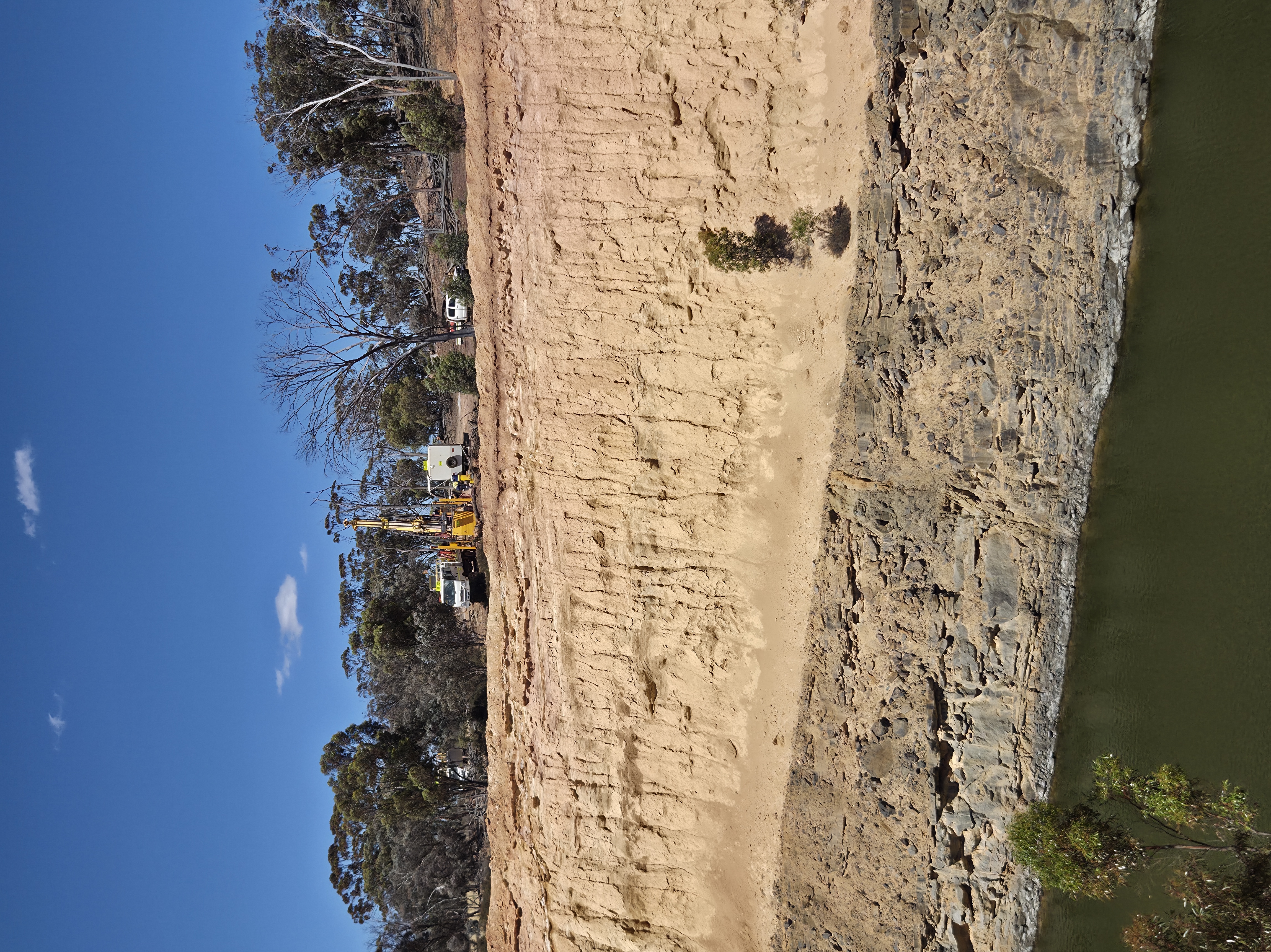
It hasn’t been without challenges, certainly around land access, and anyone who’s followed the story has seen how long it took us to get the principal land access deal done, which we announced late last year, and then we just paid the last instalment a few weeks ago.
That was a requirement for the project to go ahead. I understand people historically have had a question mark around that, but we’ve solved that.
The fact that it’s a standalone project, it has control of a very large regional package, effectively its own greenstone belt, which is early stage, but that’s the opportunity.
That will take time and money and effort to unfold its secrets, but I think that for Oceana that was an attractive aspect of the transaction as well, once this project is built, it offers substantial upside through the large exploration licence package surrounding the area of operations.
You’ve been there and done this about five times over the past 22 or 23 years. What are you expecting to move on to next?
I’m actually involved in a project in Nevada called the Converse project, which is owned by Roxmore, listed on the TSX. It’s a 5.2 million ounce resource heap leach project. It’s got some very sort of similar attributes to Katanning in so far as it’s been a project that’s been hiding in plain sight.
What I love is when people start telling me all the problems that a project has, which is often completely misinformed.
We picked this project up very cheaply last year and have been able to again start building out the institutional register for people who understand what we do and how we do it.
It’s a bit of a beast. It is right in Nevada, a few miles off the interstate. It’s a very developable project. Apart from that I’ll just keep an eye out for good opportunities and things that have probably been passed over for one reason or another.
I think there’s a lot of folklore around projects that I’ve found and some of it is right – some projects are dogs. But for some projects, the folklore is wrong. The higher gold price has changed a lot of the math for a lot of these projects as well.
But we’ll keep turning over rocks and seeing what we find.
At Stockhead, we tell it like it is. While Ausgold is a Stockhead advertiser, it did not sponsor this article.