
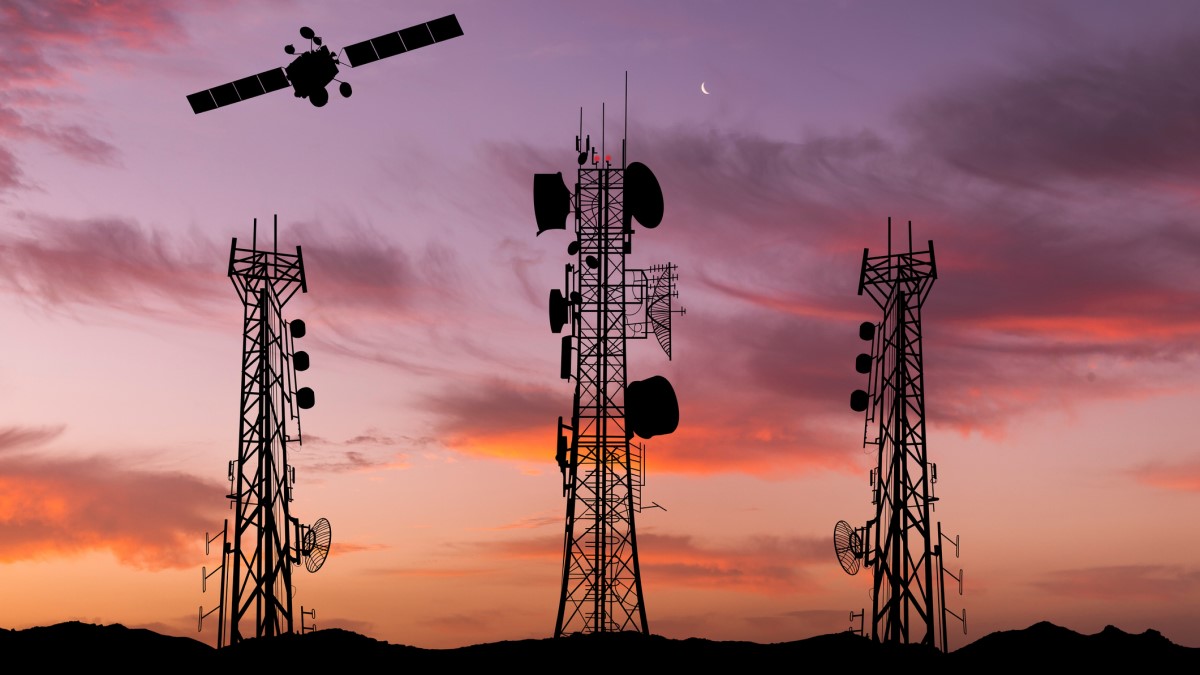

Vodafone owner TPG says Starlink will not replace mobile carriers, with chief executive Inaki Berroeta dismissing Elon Musk’s satellite network’s threat of poaching telco customers as an attempt to “substantiate” its US$1.82 trillion ($2.6 trillion) valuation.
Starlink president Gwynne Shotwell said this month that the satellite-based broadband service could provide a better service than land-based telcos and was after their market share.
“I anticipate us to be able to acquire quite a few of their customers because I think our service will be better. We will eliminate dead zones,” Shotwell said.
But Berroeta said Starlink, and Amazon’s soon-to-be-launched LEO satellite service, while beneficial in regional areas, was unlikely to steal customers from Vodafone and other Australian telcos in the cities.
“Satellite is really an enhancement or an addition to what terrestrial networks provide. It’s not really a substitute,” Berroeta said.
“That means both infrastructures will coexist. If you look at what the existing terrestrial networks provide in the cities, satellite is not able to provide that.
“There is the use of indoor coverage and underground coverage. Most of the mobile traffic, or mobile services, is done indoors and that is the limitation of satellites, and because of the nature of this technology, it will always be a limitation.
“So when they say they are going to replace services, I don’t think so. What they are going to do is enhance the reach of these (terrestrial) services.”
Berroeta said it was also “cheaper” to build more mobile towers in urban areas than it was to launch satellites.
“The good thing about satellites is a satellite is about 30km from Earth,” he said. “That means it does cover a very extensive geographical area. But because spectrum is still terrestrial spectrum and that spectrum is limited, the amount of users that satellite can hold is limited.
“And the only way to avoid that is to put many, many satellites on a very close spot. That is more expensive than what we need on the ground. That’s the nature of physics and that will remain forever.
“But I’m not surprised they (Starlink) are starting to say that because they need to create stores to substantiate the valuation that that company has.”
Starlink owner SpaceX listed last month, making Musk the world’s first trillionaire. But its share price has slipped below its IPO price of US$135 after a secondary lockup expiration released another 319 million shares onto the market.
Corporate turnaround
TPG declared its long-running corporate turnaround was nearing completion, pivoting to a “harvest” strategy that seeks to squeeze cash flow from its infrastructure assets.
Its net profit in the six months to June 30 swung to $35m versus a $20m loss in the prior corresponding period, on a pro-forma basis. But revenue growth remained anaemic.
Service revenue rose only 0.5% to $2.06bn, highlighting the challenges facing Australian telcos as they attempt to secure meaningful growth in a mature market.
And now the Australian Competition and Consumer Commission wants mobile phones to be able to automatically switch to another carrier when a customer’s primary network fails.
Berroeta said he supported the ACCC’s inquiry to make sure the policy was “fit for purpose” following a series of outages that hit Optus and Telstra, resulting in calls to triple-0 failing to connect.
“It’s a good time to review the whole triple-0 arrangement,” he said.
“Triple-0 is still purely a voice service, maybe it should be extended to other forms of communication. And then there are the different players. Triple-0 depends on a very large ecosystem, starting with the handsets, going all the way to the dispatcher, contact centres and ultimately the emergency service that are providing the care.”
Berroeta said TPG’s $1.6bn deal to share towers with Optus had been a success, enabling it to grow its market share by one percentage point.
“In this industry one percentage point in a little bit more than a year is actually a very good performance,” he said.
Average revenue per user rose to $35.21 in the half year to June 30 from $34.97 in the prior corresponding period.
TPG will pay an interim dividend of 10c per share, an 11.1% increase – 25% franked – on September 29.
This article first appeared in The Australian as TPG chief hits back at Elon Musk’s Starlink over customer poaching claims.